



Skip to content

73 % consider digital sovereignty important. Only around a third of them have a strategy for it.
Price increases are the most common harm actually experienced—not the loss of control over data that most organizations fear.

Despite its short time on the market, AI is already the fourth-largest driver of dependencies and costs.
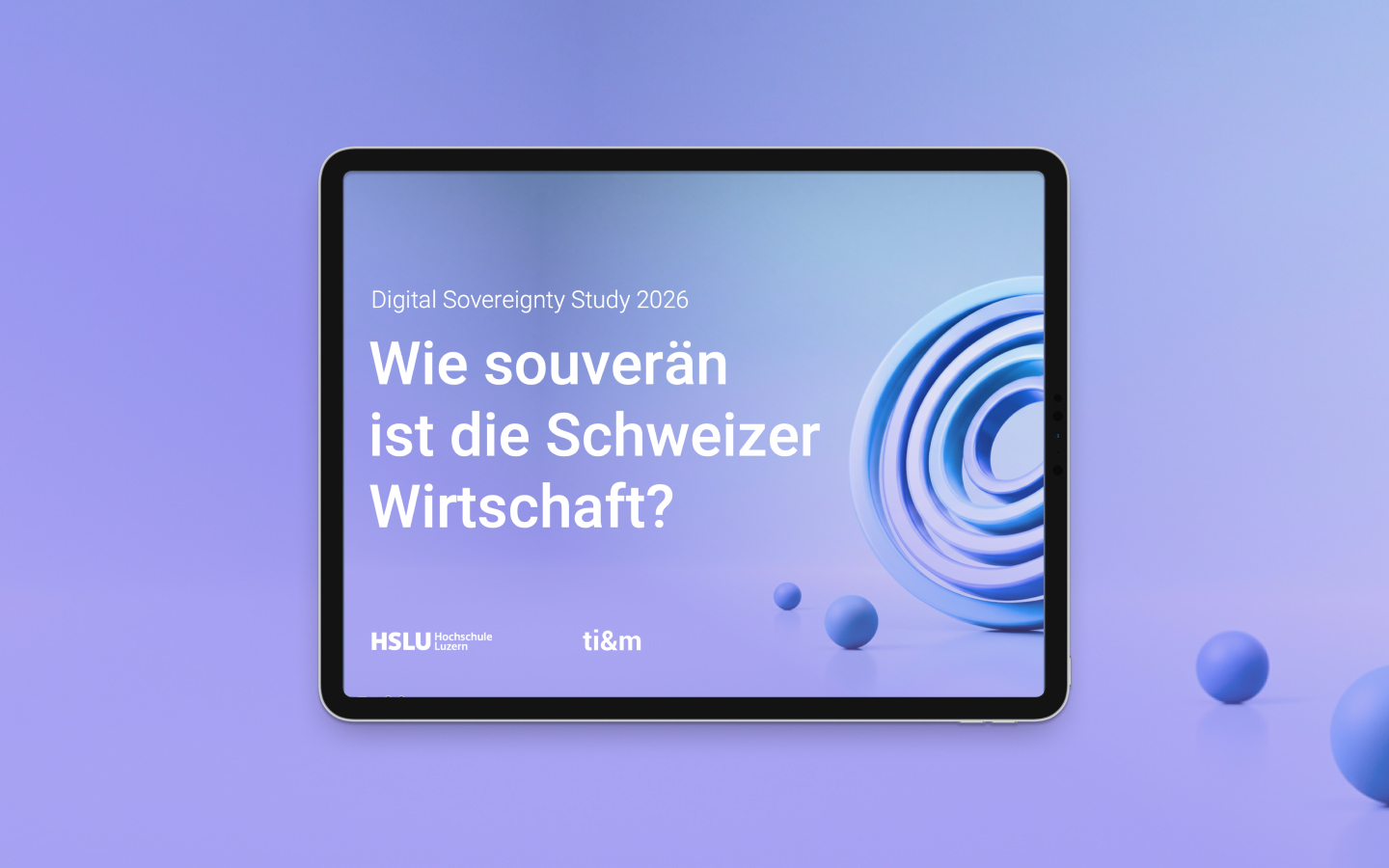
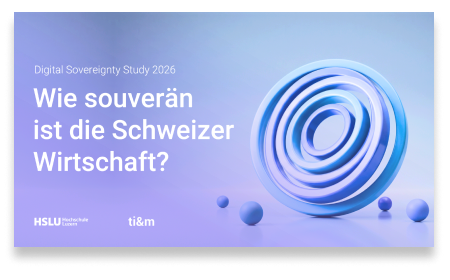
Digital Sovereignty Study 2026: Dependent, but barely prepared

What else the study shows

  • Where the largest dependencies and price drivers lie, broken down by IT area
  • Which of four archetypes best describes your organization, from Followers to Sovereignty Leaders
  • How the industries compare
  • What role open source plays in the level of sovereignty
  • Specific recommendations depending on your starting point

About the study
The Digital Sovereignty Study 2026 was conducted by ti&m and Lucerne University of Applied Sciences and Arts (HSLU). It assesses companies in terms of strategy and governance as well as operational implementation in the areas of data, technology, and operations.

ti&m Digital Sovereignty Check

The Digital Sovereignty Check analyzes how sovereign your IT landscape is, uncovers risks and dependencies, and provides concrete options for action, including open-source alternatives.

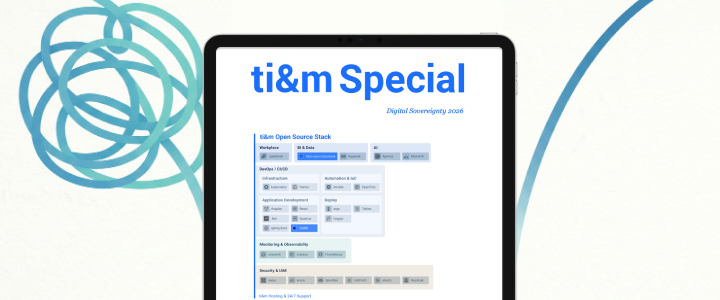
ti&m Open Source Stack

With the Open Source Stack, you gradually replace proprietary software with proven open-source solutions: from selection and implementation to operation and enterprise support, in the Swiss Private Cloud or on-premises.

Download now:

Digital Sovereignty Study 2026 (only in German)
Business Innovation & Development

Pascal Wild

Do you have questions about the study, or would you like to know how we strengthen our clients' digital sovereignty?